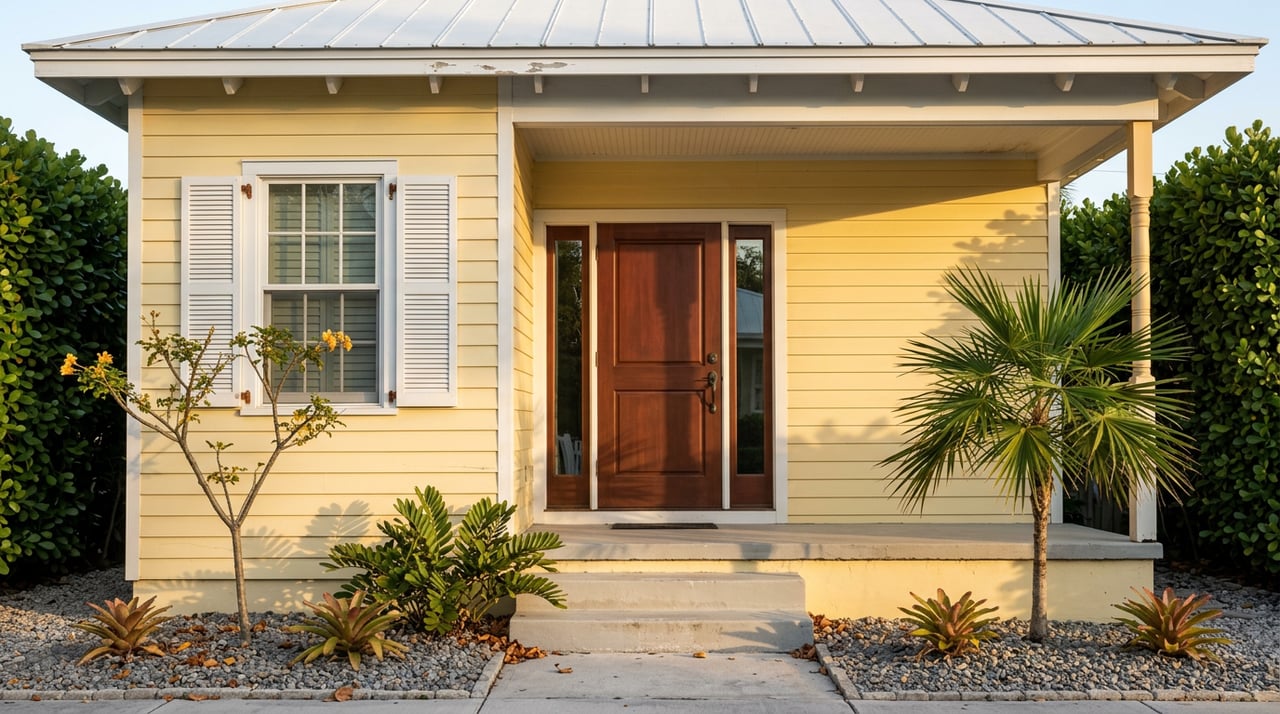
Midtown Has No Downtown. Here's Where Everyone Ends Up Instead.
Ask a Midtown resident where their neighborhood's business strip is and you'll get a pause, then a shrug, then an answer that names a street that technically belongs to somewhere else. White Street. That's where the pizza place is, the cake shop, the galleries, the pier where the dogs go. Ask if White Street is actually part of Midtown and the pause gets longer. It isn't. Not on paper.
Midtown is the residential stretch of quiet blocks tucked between two districts that both have names and identities of their own: the White Street Gallery District to one side, New Town to the other. It was built out in the 1940s and 1950s as Key West expanded beyond Old Town, laid down as houses and streets rather than storefronts. That's not an accident of history working against the neighborhood now. It's the reason every evening errand here follows the same pattern.
This isn't a complaint. It's just the shape of the place, and once you notice it, you stop expecting Midtown to produce its own commercial center and start understanding why your feet already know the route. If you live here and you're hungry, out of milk, or restless after dinner, you don't walk toward the middle of your own neighborhood. You walk toward the edge of it, because that's where the edge of somebody else's neighborhood happens to be doing all the work.
Nextdoor's own resident data for Mid Town backs this up in an indirect way. When neighbors there rank what they care about, walking, dogs, biking, gardening, and local history all sit near the top of the list. That's consistent with a neighborhood whose residents have made peace with going elsewhere for the actual errand, then coming home to the quiet. The walking isn't incidental. It's the connective tissue between a residential neighborhood and the commercial strip it borrowed.
The strip itself is short enough to walk in ten minutes and dense enough that you rarely need to leave it. White Street Pizza, at 1110 White Street, is the anchor most people mention first. The pizza is New York style, made by a chef who trained on that city's pies before bringing the approach south, and the restaurant sits inside a century-old house that's become a fixture rather than a novelty. It has a sister restaurant, Red Shoe Island Bistro, for the nights you want a different kind of dinner without leaving the block.
A few doors down, Key West Cakes at 1014 White Street and Sandy's Cafe at 1026 White Street cover the two ends of the day that pizza doesn't. Sandy's is where the coffee-and-something-baked crowd shows up before the heat sets in. Key West Cakes is where you go when someone's birthday sneaks up on you and you need something that looks like you planned ahead.
None of this reads like a curated food scene assembled for visitors. It reads like the kind of strip that exists because enough people nearby needed a pizza place, a bakery, and a breakfast spot within walking distance, and the businesses that answered that need happened to land on White Street instead of inside Midtown's own lot lines.
White Street carries a second identity that has nothing to do with dinner. The stretch is formally known as the Tennessee Williams White Street Gallery District, named for the playwright who lived in Key West and gave the area some of its literary credibility. Painters, sculptors, and independent shopkeepers have filled in the storefronts between the restaurants, and the result is a corridor where a walk to pick up pizza can turn into twenty minutes browsing a gallery window you hadn't planned on stopping at.
This matters for Midtown residents in a specific way. You're not choosing between a food errand and a cultural one. The two are stacked on the same four or five blocks, which means the version of White Street you experience on a Tuesday night picking up dinner is the same physical space as the version that hosts an art walk on a Friday. The neighborhood doesn't have to schedule culture separately from errands. It's already built into the route.
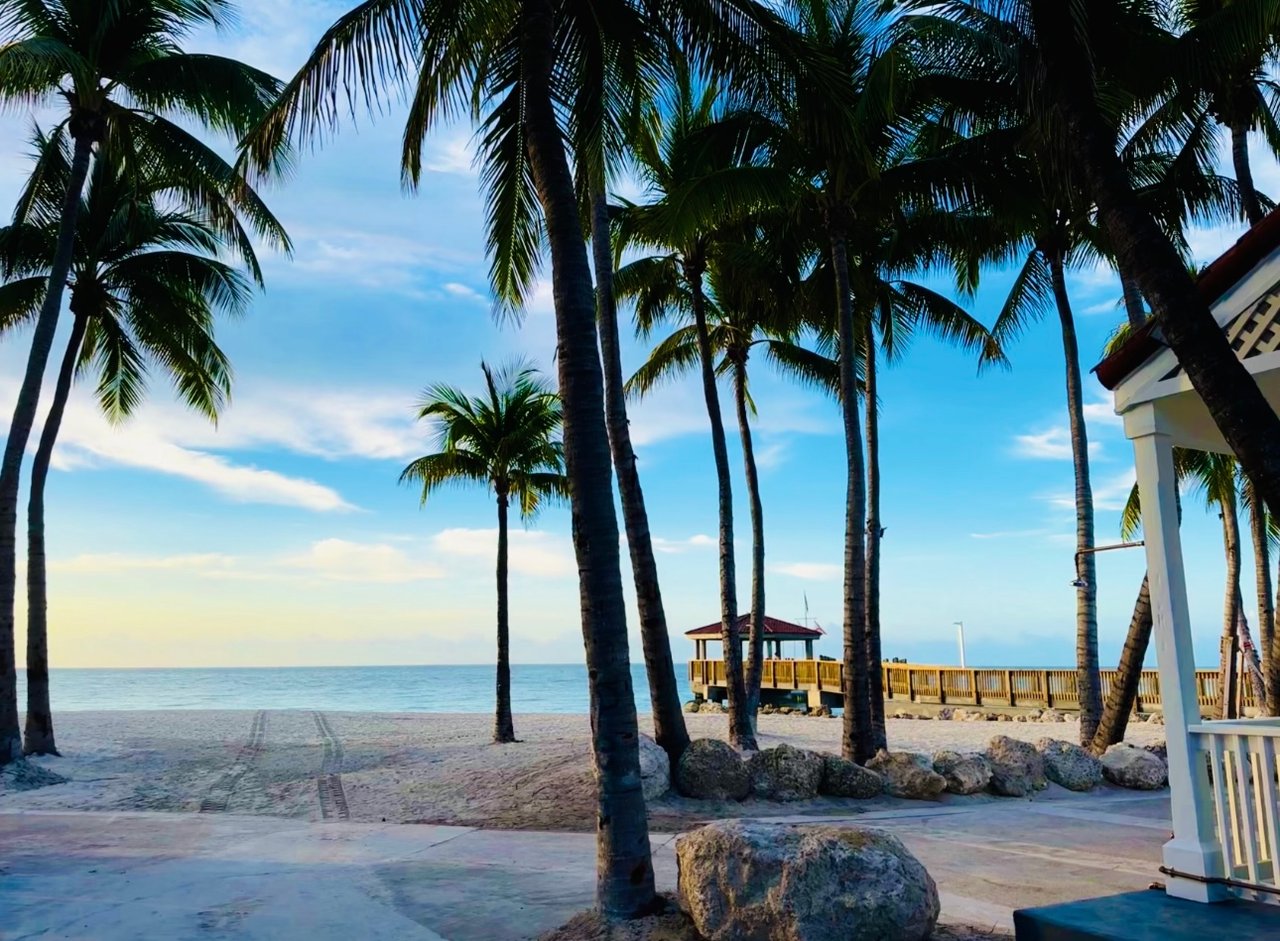
Follow White Street to its end and the block gives way to the Edward B. Knight Pier, still known to most residents by its older name, White Street Pier. The City of Key West's own facilities page describes it plainly: the pier is popular with residents and tourists alike, and it's dog-friendly. For a neighborhood where Nextdoor neighbors rank dogs and walking among their top shared interests, that combination isn't a coincidence. It's the actual destination that the whole walk has been building toward.
This is the piece that ties the borrowed corridor together. Midtown residents don't just tolerate the fact that their nearest commercial strip belongs to a different named district. They've built a full evening loop around it. Leave the house, get dinner or a coffee, pass a gallery or two, end at the pier with the dog while the light changes over the water. None of the individual stops are inside Midtown's boundary. The entire experience of living in Midtown depends on all of them anyway.
There's a version of this story where a neighborhood without its own commercial center is a neighborhood that's missing something. That's not what daily life on these blocks actually feels like. Midtown works because it doesn't have to be all things at once. It gets to be the quiet residential stretch, and it gets to borrow White Street's food, art, and water access without having to zone for any of it itself.
If you're weighing Midtown against a neighborhood like New Town, where the daily rhythm runs more toward drive-up errands and shopping centers off North Roosevelt Boulevard, the comparison is worth making with real detail rather than assumption. We laid out how those two commutes and daily patterns actually differ in our guide to choosing between New Town and Old Town, and the same logic applies to Midtown's in-between position.
For now, the short version holds. Midtown doesn't have a main street. It has White Street, permanently on loan, and most evenings, that's more than enough.
If you're curious what living on these blocks actually looks like day to day, or you're weighing Midtown against the neighborhoods around it, Lori Langton has walked this corridor more times than she can count. Schedule a free consultation and get a straight answer about what a home here actually feels like to live in.

I feel extremely blessed to call Key West my home, and I love helping others make their real estate sale or purchase a pleasant, productive and profitable one.
LORI LANGTON
Luxury Collection Specialist
(305) 923-1685
[email protected]
336 Duval Street
Key West, FL 33040