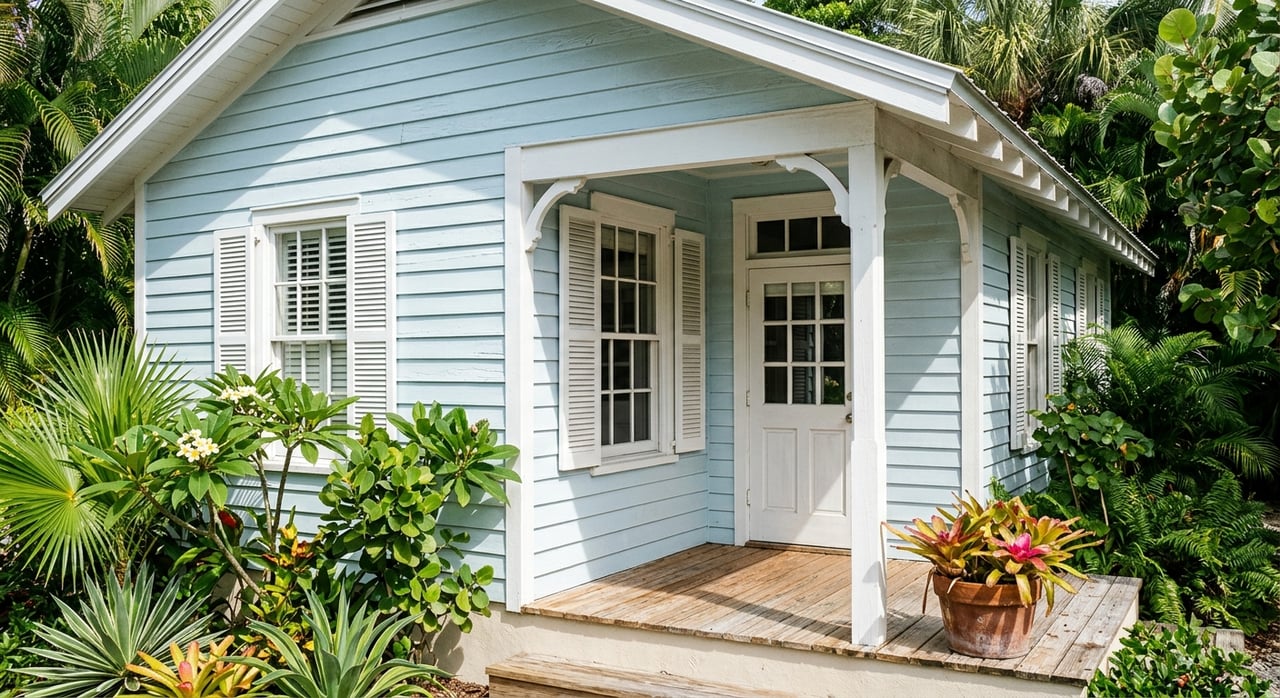
Old Town Key West: Renovate Before Selling Or List As-Is?
Wondering whether to renovate your Old Town Key West home before listing it can feel like a simple pricing question, but in this part of the island, it rarely is. If you own a historic property or manage a sale from out of town, one project can quickly turn into permits, preservation review, and flood-related decisions that affect both timeline and budget. The good news is that you do not have to guess. With the right framework, you can decide whether a focused refresh makes sense or whether listing as-is is the smarter move. Let’s dive in.
Old Town is not just another neighborhood with charming older homes. It sits inside Key West’s historic core, and the city notes that Key West contains one of the largest collections of historic wooden structures in the country. That historic setting shapes what you can change, how you can change it, and how long it may take.
In practical terms, exterior work is often subject to a separate historic review process. As of March 10, 2025, applicable improvements in the Key West Historic District require a Certificate of Appropriateness, or COA, separate from a building permit. The city states that exterior construction, painting or repainting, repair, alteration, remodeling, landscaping, and demolition may all fall into that process.
That means a pre-sale project that seems minor on paper may not be minor in real life. A paint refresh, roof replacement, fence repair, or window update can all require local review depending on the scope and visibility of the work.
Before a building permit is issued, the city says property owners or their legally designated agent in writing must secure HARC approval when required. Some straightforward work may be approved by preservation staff if it complies with the guidelines. More complex projects that substantially change the exterior appearance typically go to HARC.
For sellers, especially remote owners, this matters because timing can shift fast. HARC review and building permits are separate steps, and more involved exterior work must be submitted with a complete application before the deadline to get on a HARC agenda.
If you are not sure where your project falls, the city’s Historic Preservation Division holds open office hours every Wednesday from 8:30 a.m. to 12:30 p.m. That can be a useful early checkpoint before you hire contractors or commit to a larger plan.
Not every pre-sale improvement is worth doing, but some are easier to defend than others. National remodeling data from 2025 found that Realtors most often recommend whole-home painting, painting a single room, and installing a new roof before listing. The same report also noted increased demand tied to kitchen upgrades, new roofing, and bathroom renovations.
In Old Town, though, the best projects are usually the ones that preserve or restore character rather than erase it. The city’s historic design guidelines say roof replacements should generally be done in kind. For pre-1945 buildings, replacement windows on principal or visible elevations should match the period design, dimensions, materials, and color.
The same principle applies to other visible details. The guidelines note that 19th-century residential doors should generally be six- or four-panel wood doors unless documentation shows otherwise. Front elevation fences generally may not exceed four feet.
Because of that, the most defensible pre-sale work in Old Town is often targeted, visible, and period-compatible. That might include:
If buyers are choosing Old Town for authenticity, these projects tend to support value more naturally than an aggressive modernization plan.
Sometimes the best move is not to renovate at all. In Old Town, that is especially true when the project could expand beyond a cosmetic update and into a compliance-heavy renovation.
One of the biggest reasons is floodplain regulation. The city says grandfathered NFIP status ends once a building has been renovated by half its market value, and renovation plans at that point must include elevating the home to current flood levels. The city measures improvement value on a one-year cumulative basis.
That rule can change the economics of a project very quickly. A seller who starts with a few updates may discover that the total scope within 12 months is approaching a threshold that triggers much larger planning and construction decisions.
The city also notes that residential floodproofing is not a substitute for elevation if elevation is required. So if your renovation path is getting close to that line, it is worth pausing before you invest more money.
In Key West, renovation can become a resilience project. The city’s mitigation guidance says owners may choose to elevate the building, use water-resistant materials, raise electrical and mechanical equipment, install sewer backflow valves, or add flood vents.
Those may be worthwhile improvements for long-term ownership. But if your goal is simply to prepare a home for sale, they can introduce a much larger budget, more coordination, and a longer timeline than you originally planned.
This is one reason as-is sales can work well in Old Town. If the property already offers a strong location, appealing architecture, and historic character, buyers may still see the opportunity clearly, especially when the alternative is a long, permit-heavy seller renovation.
Market pace matters when you are weighing time versus return. Zillow estimated the average Old Town home value at $1,267,916 on June 30, 2026. Redfin’s May 2026 Key West data showed a median sale price of $1.27 million, an average of 135 days on market, and a 94.2% sale-to-list price ratio.
That does not automatically favor renovating or selling as-is. It does suggest that buyers may be selective and that homes are not always moving instantly. In that kind of market, a long renovation does not necessarily guarantee a faster sale or a better net result.
For some sellers, especially absentee owners, the smarter strategy is to avoid months of uncertainty and bring the home to market with clear pricing and a strong presentation. For others, a smaller pre-sale refresh may help the home compete without delaying the listing too much.
If you are trying to choose between renovating and listing as-is, start with a few simple questions.
If the work is basic maintenance or a cosmetic refresh, it may be easier to justify before listing. If it affects the exterior, assume COA or HARC review may be part of the path.
Add up everything planned within a 12-month window, not just the first contractor estimate. If the total could approach half of the structure’s market value, pause and evaluate the flood-code and elevation implications before moving forward.
A focused project like paint, a roof done in kind, a compatible door update, or select repairs is easier to manage than a broad remodel. If the scope feels open-ended, the risk usually rises.
For out-of-town owners, logistics matter as much as cost. The city allows a legally designated agent in writing to secure HARC approval, which can help, but a complicated renovation still requires oversight, coordination, and patience.
In many Old Town sales, renovate before listing when:
In many Old Town sales, list as-is when:
This approach fits both the city’s review process and the reality of a market where patience may be required.
If you own an Old Town property but live elsewhere, do not start with demolition or a contractor wish list. A better sequence is usually much simpler.
Start by checking with preservation staff to see whether the work is likely to stay in the staff-approval lane. Then get a contractor bid based on that likely scope. After that, review the numbers and timing with a local real estate advisor who understands Old Town pricing, buyer expectations, and the tradeoff between investing more and going to market sooner.
That process can help you avoid the most expensive mistake of all, which is starting a renovation that becomes larger, slower, and more regulated than expected. If you want clear guidance tailored to your property, schedule a free consultation with Lori Langton.

I feel extremely blessed to call Key West my home, and I love helping others make their real estate sale or purchase a pleasant, productive and profitable one.
LORI LANGTON
Luxury Collection Specialist
(305) 923-1685
[email protected]
336 Duval Street
Key West, FL 33040