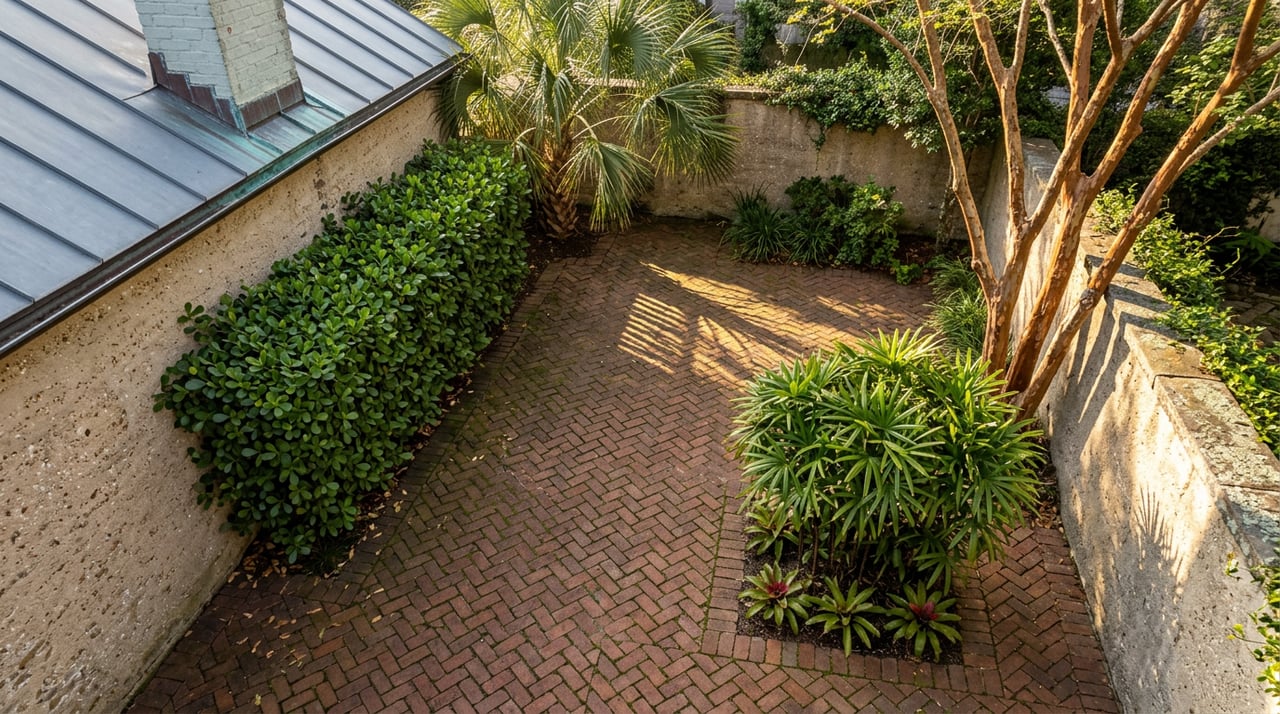
Truman Annex Doesn't Have a Backyard. It Has 45 Acres Next Door.
Walk out any gate in Truman Annex on a Thursday afternoon and you'll notice something: nobody's heading toward a clubhouse or a shared lawn inside the neighborhood. They're heading toward Southard Street, past the Coast Guard gates, into Truman Waterfront Park.
That's not a coincidence. It's the whole point of how this neighborhood works. Truman Annex is 90 households behind private gates on some of the tightest, most historic lots in Key West, and it was never built with its own town square, courtyard lawn, or community pavilion. The green space, the market days, the concerts, all of it sits on the other side of the fence, open to anyone on the island. Understanding that arrangement, not just knowing it exists, changes how you think about what you're actually getting when you live here.
The land itself explains why. What's now Truman Annex was originally Fort Taylor, then a working naval station that serviced vessels for decades. President Harry Truman used the property as his winter White House during eleven visits between 1946 and 1952, logging 175 days on site, which is where the neighborhood gets its name. When the Navy released the surplus property between 1973 and 1977, the city's own redevelopment agency spent twelve years failing to agree on a master plan before Truman Annex finally took shape as the gated, mixed-use community it is today.
That history matters because it means the neighborhood was assembled from military infrastructure, not planned around a central green. There was no obvious place to carve out a shared park inside the gates, and with roughly 90 households and an average of two people per household, there was never enough density to justify one. What Truman Annex got instead, as part of that same redevelopment story, was direct proximity to 45 acres of public waterfront that the city eventually built out into a genuine park.
If you want to see how residents actually use that arrangement, Thursday is the day to watch. The Truman Waterfront Farmers Market sets up in the afternoon and runs into the evening, and it's grown into more than a produce stand. On a given week you'll find:
The park itself is open daily from 7 a.m. to 11 p.m., and the dog park keeps similar hours, so this isn't a once-a-week arrangement. It's a park that's simply always on, and Truman Annex residents treat it the way most neighborhoods treat a private lawn: as the place you walk the dog before dinner or let the kids burn off energy after school, except everyone else on the island has the same access.
The market doesn't stay static through the seasons, which is part of why it's worth paying attention to even if you've lived here for years. In July, the Thursday market ran a Summer Splash afternoon, activating the splash pad alongside bounce houses and picnic blankets specifically to give families a way to cool off during the hottest stretch of the year. Mango Mania followed with a market day built entirely around the season's mango harvest, from fresh fruit to mango-inspired food and drink vendors.
Neither of those is a one-off special event bussed in from outside. Both are the same Thursday market organizers building seasonal programming into a space they run year-round, which tells you something about how much civic infrastructure actually exists in a park most people think of as just a green field near the cruise docks.
Zoom out from the weekly rhythm and the annual calendar tells a similar story. Earlier this year, the park hosted the 20th Annual Florida Keys Seafood Festival over two days in February, drawing crowds for fresh local seafood and raising money for sustainable fisheries and youth scholarship programs. The following week brought the Key West Art & Craft Festival, now in its third consecutive year at the park and, at 61 years running, one of the longest continuously operating art shows on the island. In March, Truman Waterfront hosted Taste of Key West, a fundraiser now more than three decades running that brought together more than 50 culinary and beverage partners in support of AH Monroe's health clinics, affordable housing, and recovery programs across the Keys.
None of these events happen because a promoter picked Key West for a season. They happen because the park has become the default home for the island's biggest civic and charitable gatherings, and that infrastructure sits closer to Truman Annex than to almost anywhere else in the city.
The park's amphitheater, officially the Coffee Butler Amphitheater, is where that civic infrastructure turns into a real concert venue. This spring it hosted Foreigner in April and The Marshall Tucker Band in May, both full-production touring shows on a stage that seats an audience small enough to still feel intimate.
The next marquee date is September 30, when Live Nation and Rams Head bring Gov't Mule and Ziggy Marley to the amphitheater for a co-headlining show. If you live inside the Truman Annex gates, that's a five to ten minute walk from your front door to a touring act most cities would require a ticketed drive across town to see.
Here's the part that's easy to miss if you've only ever thought of Truman Annex as a private, gated enclave. The thing that makes daily life here feel generous, the market, the dog park, the splash pad, the concerts, isn't private at all. It's not managed by an HOA, it's not reserved for residents, and nobody behind those gates has any more claim to a parking spot or a market stall than a visitor staying at a hotel two blocks away.
That's an unusual trade for a gated neighborhood to have made, and it's worked in the residents' favor. Truman Annex gets the privacy and security of a controlled-access community for its actual homes, while its shared outdoor life runs on public land the city maintains, programs, and keeps open sunrise to nearly midnight, every day of the year. You don't get that combination in most gated communities, where the tradeoff for privacy is usually a smaller, more limited set of amenities. Here, the tradeoff runs the other way: the gates protect the houses, and the park outside them does everything else.
If you're already living behind those gates, none of this requires you to do anything differently. You're probably at the market most Thursdays anyway. But it's worth knowing exactly what you're standing in when you're there, because the next time someone asks what it's actually like to live in Truman Annex, the honest answer isn't about the architecture behind the walls. It's about what's waiting on the other side of them.
If you ever want to talk through what's happening in the Truman Annex real estate market, or anywhere else on the island, Lori Langton has been a Key West resident since 2002 and knows this neighborhood block by block. Schedule a free consultation whenever you're ready.
I feel extremely blessed to call Key West my home, and I love helping others make their real estate sale or purchase a pleasant, productive and profitable one.
LORI LANGTON
Luxury Collection Specialist
(305) 923-1685
[email protected]
336 Duval Street
Key West, FL 33040